Author: Debra Bell

  • How Do You Raise An Independent Learner?

    a collaborative project…

    I’d like to start a discussion about the ways in which we can encourage our kids to learn independently.  But before we jump into making a list, it seems to me a good place to start is to highlight the ways in which our kids are already primed for independent learning.

    Your child was born hard-wired to learn. We come preloaded with the gift of curiosity.  This innate interest in the world around us motivates us to explore our environment. The hours babies invest in learning to control their arms, legs and hands is propelled by a desire to grab those delightful objects they see hanging just beyond their reach.  They want to bring those objects closer so they can examine the shape and feel, and figure out what else they can do with those shiny things.  This innate curiosity is why babies eventually crawl, then walk, then run.  It’s a gift from the Creator that causes us to grow.

    Without a desire to learn, we would never fully develop.  Not only does curiosity cause us to do the hard work necessary to develop our gross and fine motor skills; but it also causes our brains to develop. Intellectual growth comes from learning. The more we invest in learning, the more our brains develop.

    Staying  mentally active is also one way we can delay the effects of aging. God intends that learning be a lifelong endeavor as part of healthy living. (Homeschooling isn’t just beneficial for your children, it is good for us moms, too.)

    Here’s another part of the equation: Not only are kids hard-wired to learn, we are also built to be social creatures. In order to reach our full intellectual maturity we  need others to help us. This is primarily facilitated by parents and siblings, but as we grow our social circle should grow and we learn from interacting with others, too. 

    Learning is stimulated when we exercising our brains in groups.

    How should these two truths —our gift of curiosity and our social nature — influence our homeschooling? What do you think?

  • Four Year Plan +1 for High School @ Home

    In the Ultimate Guide to Homeschooling Teens, Chapter 12,  I write about the necessity of laying out a tentative schedule of coursework and tasks for high school at the beginning of  8th grade.  That’s for those of you with foresight.  ( I didn’t gain that until my third child.)

    The benefit of the plan is to make sure everything important gets done and that you distribute the tasks in a way that minimizes overloading the teen’s schedule.  ( The senior year, for instance, needs to have time for filling out college applications and making the college decision.)

    I’ve uploaded the Four Year Planning Grid and an example with pre-labeled tiles you can move around in your quest for the best workable schedule: Four+Year+Plan+Movable_Tiles.  These are Word documents.

    I include the extra year ( +1) because when you work backwards from the most competitive next step your teen will possibly take following high school graduation, you’ll find some things need to be done by the end of 8th grade, too.

    I’ve also created a High School Checklist that includes desirable coursework and activities you might want to consider.

  • Ultimate Planner Review

    This review made my day! And there is an Ultimate Planner giveaway attached.

  • Two-Fold Purpose of the Ultimate Homeschool Planning System (UHPS)

    I love homeschool moms.  I love their passion, their resourcefulness and love for their families. But now with the luxury of viewing homeschooling through the rear view mirror, I can see a couple of sore spots that contribute to our exhaustion and occasional loss of vision.

    • We are more aware of our own shortcomings in our homeschool life than we are of God’s activity.
    • We feel guilty when our kids work independently of us because our image of a good teacher is one who micro-manages her students.

    If there ever was a ploy of the devil in our midst, this is it.  Our enemy doesn’t want you to notice God at work.  He wants you to keep believing it all depends on you! Secondly, he’d never want your kids to learn independently.  That would give them too much motivation and investment in this venture, and he isn’t looking for a successful outcome.

    The Ultimate Homeschool Planning System (UHPS) is a small attempt to keep your eyes of faith focused on God and not yourself.  Even though you are writing down the nuts and bolts of your academic plan each week, we ask you to first spend time recounting God’s faithfulness and surprising blessings from the week before.  We give you a place to list small beginnings, signs of progress, notable achievements and unexpected acts of kindness all under a heading we call “Evidences of Grace,” just so you can remember what the source of these memorable moments s — God’s unmerited favor in your family’s life.  We also know from our own homeschooling days your kids are going to look inside your planner to see what you think is worth noting.  We want them to find a record of God’s activity as the focal point, not a manmade effort.

    Secondary to that ultimate goal, we want to help you raise an independent learner. If you don’t, you aren’t going to finish the course. Dependent students are a key contributor to homeschool burnout.  We want you to know the truth about learning: You can’t teach anyone anything.  Is that a shocker? Especially from a teacher with thirty-some years of experience under her belt? You can only motivate a student to engage in learning. And learning only results when effort on the student’s part is expended.  If your child is staring at you dull-eyed and slack-jawed, go find something better to do with your time.  Kids only learn when they are cognitively engaged. The outward signs of that are effort, interest, motivation, and initiative.

    Here’s some really good news about that reality: God has hard-wired your kid to learn.  That’s right, we are built for learning. We will live longer, and lead happier, healthier lives as long as we keep using our brain to learn. An ugly truth about this is schools aren’t built to encourage independent, healthy learning. Rather they are built for crowd control.  And because most of us were schooled under that system, the powerful model in our mind is a teacher at the front of the room controlling our time, our work, our interests, our learning.  The Ultimate Homeschool Planning System ( UHPS) which includes a planner for mom, a planner for students ( 4th-8th) and a planner for teens (7th-12th) is designed to foster and reward independence and initiative while you provide accountability and strategic guidance.

    We pray putting our planners in front of you each day will be a gentle reminder of the central and secondary goals of homeschooling:  Seeing God’s handiwork in the details of your family life and raising up the next generation trained to seize responsibility and lead their own families according to His plans.

    How has God been faithful in your family’s life this past week? Let’s get that down in writing.

  • Sneak Peek: Ultimate Weekly Planner for Teens

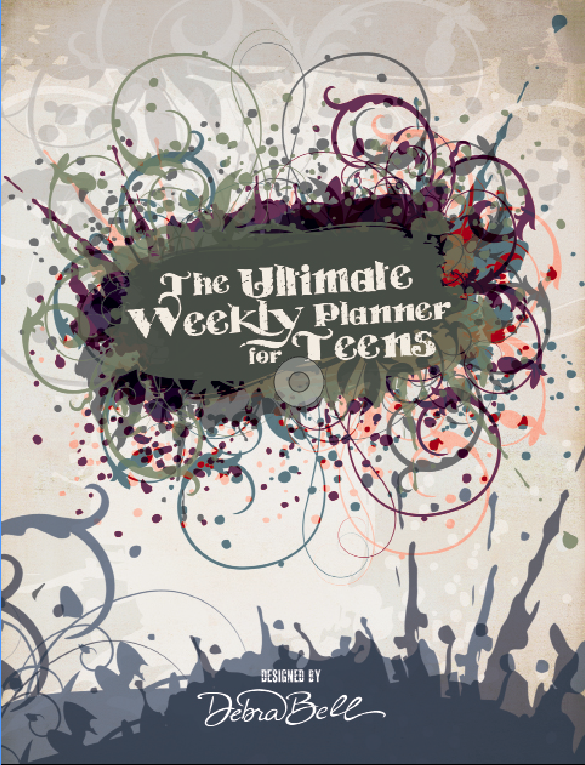
    I want to give you a quick look inside the forthcoming Ultimate Weekly Planner for Teens. ( While part of the Apologia team is on vacation, I grabbed a few pages to show you. I didn’t ask, hope that’s okay.) I think it is so hip and cool… and by association I am therefore (possibly) still hip and cool. (Are you buying this.) Anyway, here it is:

    Sneak Peek Teen Planner

    Thoughts?

    So far, the teen focus groups have loved the design, and moms have loved the organizational system. I am particularly excited about all the study aids we’ve put in the back. My goal is to make our planners for students and teens the Swiss army knife of the planner world (which I did not realize is quite vast.)

    Besides plenty of space for monthly planning and weekly assignments, we’ve created lots of forms for the record-keeping collegebound teens need to do (and not you). We’ve also given them checklists for high school graduation and a timeline for college admissions so they don’t miss something important. And there is a big study aid section with the kinds of information teens repeatedly use in each subject area.  Notice how I managed to sneak in some SAT vocabulary practice, too.

    Finally, we’ve made it small enough to fit into a big purse or backpack — no excuse then to leave it behind.  Feedback before we go to press? Should we print a gazillion? (This should be out before the end of summer.)

    Related: Sneak Peek Inside Mom’s Planner.

  • Creative Writing Class with Lili Serbicki

    I am thrilled to announce that we’ve just added a creative writing course for high school students to our line up of online classes .   Lili (Meldrum) Serbicki is a former student of mine (and Vicki Dincher’s, our registrar) who was a joy to work with throughout high school.  She is immensely talented and prolific.  Now a college graduate and professional writer, I contacted Lili as soon as I heard she might be interested in offering a creative writing course online.

    I’ve had many students over the years in my online AP English courses who wanted to develop their creative writing talents.  AP English certainly requires a lot of writing of students, but it does not primarily focus on creative writing per se.  So, she is a perfect fit for our focus here:  She has developed a creative writing class aspiring writers will love; and at the same time, Lili will help them lay a foundation for a future AP English course.

    You can read her course description here: Creative Writing

    And you can register for her class here.